
With the explosion of generative AI, I hear the same question from business owners all the time:
"If AI can generate a website layout, write copy, and build a prototype in seconds, why do I need to invest in professional UX design?"
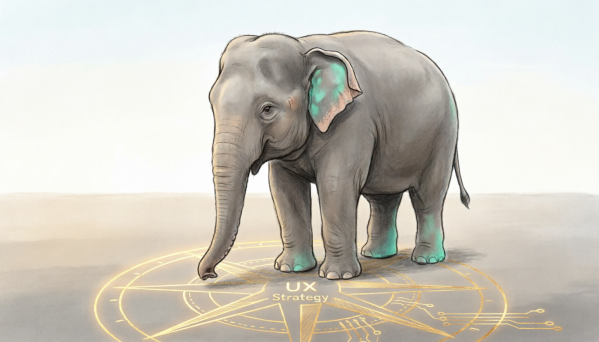
It’s the elephant in the room, and it’s a fair question. AI is an incredible tool. But relying on AI to do your UX is like using a power drill to build a house simply because you own one. The tool is fast, but it can’t read the blueprints, understand the foundation, or make sure the roof doesn’t collapse.
Here is the most important distinction to remember: AI generates outputs. UX design creates outcomes.
What AI is Actually Great At
Let's not pretend AI isn't useful. In the hands of a UX professional, AI is a superpower.
It is fantastic for:
- Speed and efficiency: Rapidly generating wireframes and visual concepts.
- Brainstorming: Offering dozens of layout variations in seconds.
- Data processing: Analyzing large sets of user data to find basic patterns.
If you are looking for a quick mockup or a starting point, AI is brilliant.
What AI Cannot Do (and Why You Still Need a Human Expert)
AI lacks the human context required to build a truly successful, revenue-generating business experience.
Here is what gets lost when you rely solely on AI:
1. AI lacks empathy
AI cannot sit next to your customer, watch them struggle with your checkout process, and feel their frustration. It doesn't understand the emotional journey of buying your product. UX design is deeply rooted in human empathy—understanding why a user feels hesitant, confused, or delighted. AI can mimic empathy, but it cannot actually feel it.
2. AI lacks business context
AI doesn't know your specific profit margins, your unique brand voice, or your strategic business goals. It works on averages. If you ask AI to design a checkout page, it will give you the "average" best practice. But your business isn't average. A human UX expert tailors the experience to drive your specific revenue goals and align with your brand.
3. AI misses the edge cases (and accessibility)
AI works on patterns and majority data. It doesn't naturally account for the edge cases, the accessibility needs, or the nuanced human behaviors that dictate whether a user converts or bounces. An AI-generated site might look beautiful, but if it's not accessible, you are actively excluding a massive portion of your market.
The Danger of "AI-only" UX
If you rely on AI without a solid understanding of user experience, you end up with a product that is fast, polished, and completely generic. It looks like every other AI‑generated interface. It lacks the intentional friction‑reduction that actually drives sales. When customers land on it, they can sense that something is missing. It doesn’t carry the human judgment that makes an experience intuitive, trustworthy, and worth returning to.
The Winning Formula: AI + human strategy
AI is not a replacement for UX strategy; it is a tool within UX strategy.
The businesses that will win in the next decade aren't the ones replacing their UX experts with AI. They are the ones using AI to make their UX experts faster and more efficient.
You still need a human expert to steer the ship, ask the right questions, conduct real user research, and ensure the final experience aligns with both your users' needs and your business goals.